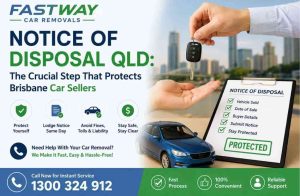
Selling a car in Queensland can feel easy, almost too easy, but one small misstep can turn into weeks or months of trouble. A lot of Brisbane vehicle owners do the usual routine, hand over the keys , take the payment and then sort of think “done, finished , no more worries”. But, that little belief can spark surprise things like parking or speeding fines, toll charges, registry problems , and even awkward legal complications
What fixes it is pretty clear, you should lodge a Notice of Disposal as soon as the vehicle changes hands. This notification matters because it tells Queensland authorities the vehicle is no longer in your care, so you are not treated as responsible for what happens after the sale
In this walkthrough, we’ll break down what a Notice of Disposal really means in Queensland, the typical blunders Brisbane sellers run into, and how you can dodge turning into the next cautionary story
A Notice of Disposal is a notification submitted to Queensland’s transport authority advising that you have sold or transferred ownership of your vehicle.
Once lodged correctly, it creates a record showing:
This helps protect you if the new owner delays registration transfer or incurs penalties after the sale.
Think of it as your official proof that the vehicle is no longer yours.
Every year, sellers in Brisbane run into pretty much the same trouble. A lot of it could be avoided with proper paperwork and, you know, same-day follow up.
Let’s go through five unusual situations that keep showing up in the real world.
A lot of sellers believe the buyer’s word, like it is basically handled already, just later.
But “next week” turns into next month , and sometimes it just… drifts off, never to return
If the buyer gets parking fines, speeding tickets, or leaves the vehicle sitting around before ownership changes, authorities may first reach out to the registered owner, which is often you.
And without proof of disposal, untangling it can feel stressful and drag on longer than it should.
This situation catches many Queensland sellers by surprise.
A vehicle transfer may be delayed or rejected if required documentation is missing or invalid.
A blocked transfer means the vehicle can remain registered in your name longer than expected, increasing your exposure to fines, tolls, and liability issues.
Queensland regulations surrounding vehicle transfers and safety certificate requirements can change over time, causing confusion among private sellers. Many people rely on outdated advice from friends or old online posts.
Always verify current requirements before selling your vehicle.
Many Queensland sellers expect every transaction to be completed online.
Sometimes eligibility restrictions, missing information, or system requirements prevent online processing.
Delays can create a gap between the sale date and official records, leaving uncertainty about who is responsible for the vehicle during that period.
Some Brisbane vehicle owners forget they have automatic registration payments set up.
Weeks later, they notice money continuing to leave their account.
Ongoing deductions can result in unnecessary costs and additional effort to resolve payment disputes.
This is one of the most common post-sale issues in Brisbane.
The vehicle is sold, but toll accounts remain connected.
You could continue receiving toll charges long after the vehicle has left your driveway.
Following a simple checklist can save you significant stress later.
The process is generally straightforward when you have:
The key is acting immediately rather than waiting days or weeks after the transaction.
The sooner the disposal is recorded, the sooner your protection begins.
A missing or invalid safety certificate can create major transfer delays.
When the transfer stalls:
Many Brisbane sellers incorrectly assume that handing over the keys automatically removes their obligations.
In reality, documentation matters.
Always ensure all required paperwork is completed correctly before finalising the sale.
Not every sale goes smoothly.
Common complications include:
In these situations, having proof of sale and a submitted Notice of Disposal can make resolving issues significantly easier.
Ask yourself:
If you answered “no” to any of these questions, take action immediately.
Never leave the responsibility of paperwork entirely to the buyer.
No matter how trustworthy the buyer seems, protect yourself by completing your side of the process immediately.
This single rule prevents most post-sale disputes.
The best vehicle sales follow the same pattern:
When these steps are followed, sellers rarely encounter major issues later.
A Notice of Disposal isn’t just another piece of paperwork—it’s your protection after selling a vehicle in Queensland.
It clarifies the exact point when responsibility shifts, and also gives solid proof if something weird pops up later. Whether you’re offloading the vehicle privately , doing a trade-in , or simply disposing of an unwanted car, lodging the notice sooner rather than later really matters. It can keep you away from fines, toll charges, registration headaches, and all that extra stress that no one needs.
If you’re selling a vehicle in Brisbane, don’t lean on verbal assurances. Finish the paperwork, submit the notice, and hold on to your copies. A few minutes of effort today can, honestly, prevent months of trouble tomorrow.
Ideally, it should be lodged immediately after the sale is completed.
Without proper records, you may face complications. A Notice of Disposal helps demonstrate when ownership responsibility changed.
Yes, if toll accounts or tags remain linked to the vehicle. Update these immediately after the sale.
Common reasons include missing documentation, incorrect information, or issues relating to safety certificate requirements.
Absolutely. Copies of paperwork can be invaluable if disputes or questions arise later.